
Most water heater noises in Fullerton homes come from sediment, the burner or element, or the plumbing around the heater. Popping and rumbling usually mean sediment at the bottom of the tank. Hissing or sizzling can be condensation on a gas burner or a leak dripping onto something hot. A high-pitched whine or scream usually comes from a valve. Here's how to tell them apart.
Popping and rumbling
This is the most common complaint. Hard water leaves minerals that settle as a layer of sediment on the bottom of the tank. Water trapped under that layer boils in small bursts when the burner fires, making popping or rumbling sounds. On electric tanks, sediment can build up around the lower element, causing a similar crackle. Orange County water is generally considered hard, and Fullerton's supply draws heavily on groundwater from the basin managed by the Orange County Water District, so this is common locally.
What helps: flushing the tank, if the sediment is still loose. See how to flush a water heater. If the heater is older and the noise is loud, the sediment may be packed hard, and flushing may not help much. That's often a sign the tank is nearing the end of its life.
Hissing and sizzling
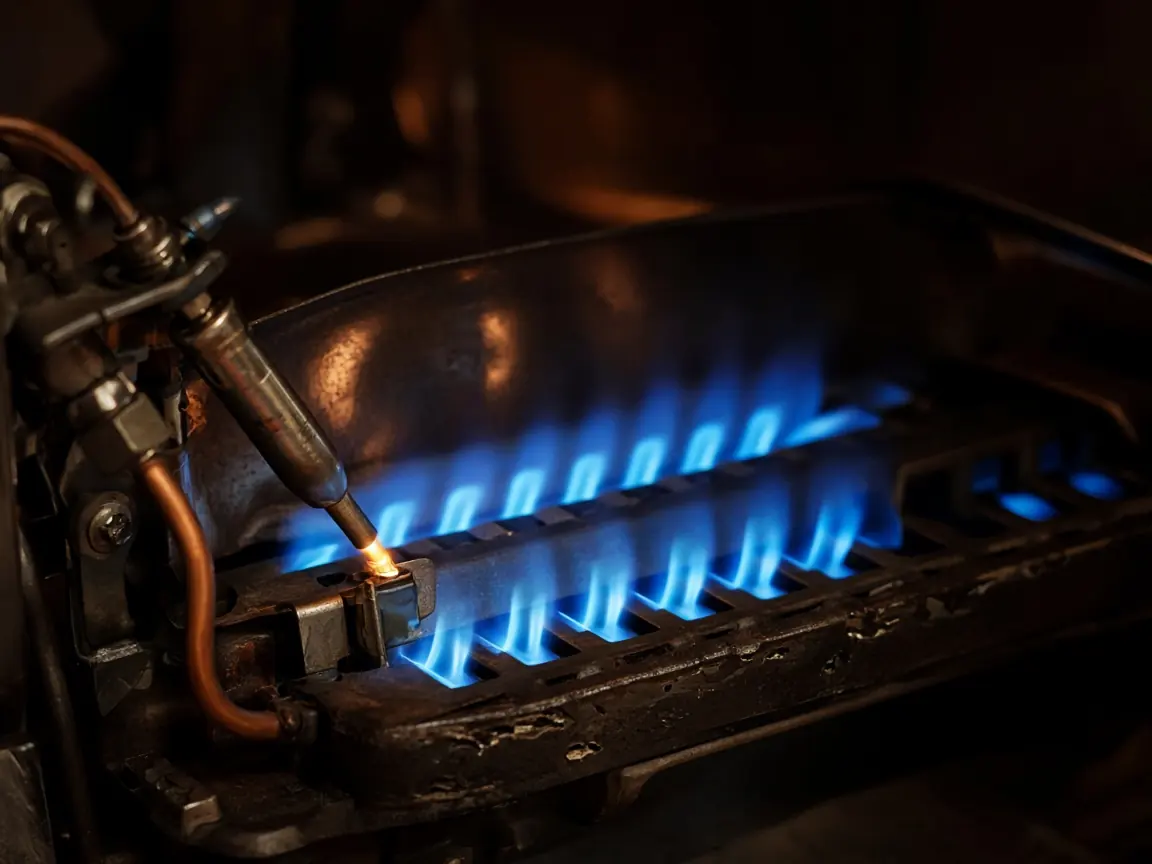
On a gas heater, a little sizzling when the burner fires can be condensation dripping onto the flame, especially when the tank fills with cold water. It should stop as the tank warms up. Constant sizzling, or water you can see dripping into the burner area, may mean a leak in the tank or a fitting above it. On an electric heater, sizzling can come from sediment around an element.
What helps: dry the area and look for where water is coming from. If it's coming from inside the tank, see leaking water heater help.
Not sure what your water heater needs? Talk it through by phone.
Call 000 000 0000Ticking and tapping
Ticking often comes from pipes expanding and contracting as hot water flows, especially where they pass through straps or framing. Heat traps, small valves in the inlet and outlet fittings that reduce heat loss, can also tick. These sounds are usually harmless.
What helps: sometimes a plumber can add a cushioned clamp or swap a noisy heat trap nipple. Usually it's left alone.
Screaming, whistling or whining
A high-pitched noise often comes from a partly closed valve, such as the cold inlet valve or a valve elsewhere in the house, or from the temperature and pressure relief valve if it's starting to open. A screaming relief valve is a warning sign of high pressure or temperature.
What helps: make sure the inlet valve is fully open. If the noise is coming from the relief valve, or water is coming out of its discharge pipe, turn the heater down or off and call. Never cap or plug the relief valve line.
Humming
Electric heaters can hum if an element is loose. Heat pump water heaters have a fan and compressor that hum or whir by design. That's normal, though a sudden change in the sound is worth checking.
Banging when faucets close
A loud bang when a faucet or appliance shuts off is water hammer, a pressure surge in the pipes. It isn't the heater's fault, but it can stress the heater and its connections. High household pressure makes it worse. A plumber can check pressure and add water hammer arrestors.
When to call
Call if the noise is loud and new, if it comes with leaks, rust-colored water or a gas smell, if the relief valve is screaming or discharging, or if flushing doesn't help. See water heater repair in Fullerton and gas water heater repair. Have the heater's age, fuel type and a description of the noise ready.
When should you call about this?
Call when the problem keeps coming back, when there's water where it shouldn't be, when a fix means opening gas, venting or electrical parts, or when you're weighing repair against replacement. Describe what you've noticed, give the heater's fuel type, size and age, and share your Fullerton address or cross streets. You'll hear on the call whether your address is covered.
Sources
Checked on November 13, 2026. Rules and programs change, so confirm anything important with the agency.