
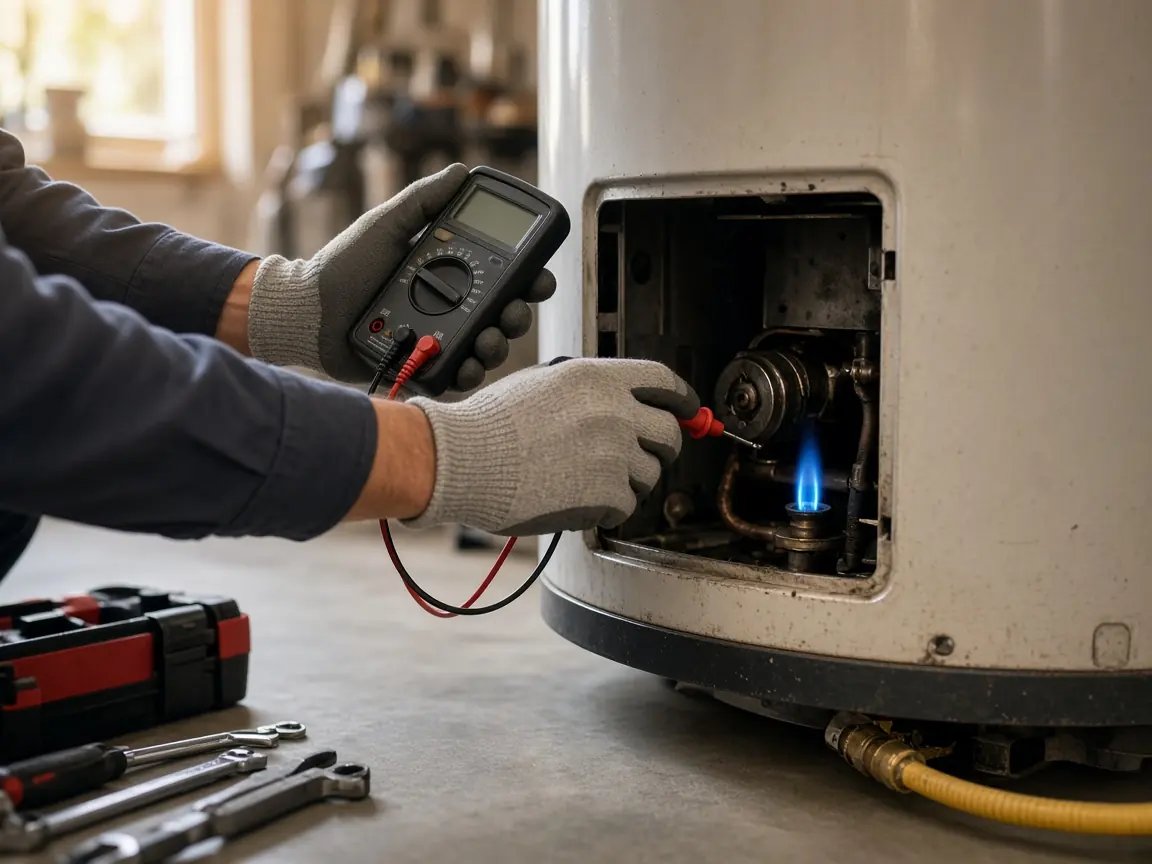
Flushing a tank water heater means draining some or all of the water to clear sediment from the bottom of the tank. In Fullerton, where water is generally considered hard, an annual flush can quiet popping noises, protect electric elements and help the heater work efficiently. The job takes about an hour, and you'll need a garden hose and somewhere safe for hot water to drain.
When to flush, and when not to
Many manufacturers suggest flushing about once a year. Check your manual. Flushing a heater that has been maintained regularly is low risk. Be more careful with an older tank that has never been flushed. Heavy sediment can clog the drain valve and keep it from closing, and disturbing it can expose a weak spot in the tank. If your heater is past about ten years and has never been flushed, consider having a provider do it, or ask whether it's worth it.
What you'll need
- A garden hose long enough to reach a drain, driveway or yard spot where hot water won't hurt anything
- A flat screwdriver or a wrench, depending on the drain valve
- Gloves and eye protection
- A bucket, for checking how clear the water is
Not sure what your water heater needs? Talk it through by phone.
Call 000 000 0000Step-by-step: gas tank heaters
- Turn the gas control knob to Pilot or Vacation. That keeps the burner from firing while the tank is drained.
- Close the cold water supply valve on the pipe entering the top of the heater.
- Open a hot water faucet somewhere in the house. That lets air in so the tank can drain.
- Attach the hose to the drain valve near the bottom of the tank, and run it to a safe drain spot.
- Let the water cool for a while if you can. Tank water can scald.
- Open the drain valve and let the water run. Fill a bucket now and then to see whether the water still carries sediment.
- With the drain open, briefly open the cold supply valve a few times to stir up sediment and push it out.
- When the water runs clear, close the drain valve and remove the hose.
- Open the cold supply valve fully and let the tank refill. Leave the house faucet open until water flows steadily without spurts of air.
- Turn the gas control back to its normal setting. Relight the pilot if needed, following the label.
Step-by-step: electric tank heaters
Follow the same steps, but turn off the breaker first instead of the gas. Don't turn the breaker back on until the tank is completely full, because elements burn out in seconds if they heat with no water around them.
Safety notes
- Never open the relief valve to drain the tank. That's not its job, and opening an old valve can make it leak afterward.
- Don't drain hot water onto lawns, plants or into the street gutter. Use a floor drain, a laundry sink or a safe spot. Check with the City of Fullerton about where draining is allowed, since storm drains carry water untreated to creeks and the ocean.
- If the drain valve won't close fully, cap the hose threads and call. A worn plastic valve can be replaced with brass.
Tankless heaters are different
Tankless units are descaled, not flushed. A small pump circulates a descaling solution through isolation valves for about an hour. See tankless repair and hard water and water heaters.
After the flush
Check the drain valve for drips over the next day, listen for less popping when the heater fires and note the date so you remember next year.
Talking it through by phone
If you'd rather have someone look at it, call the number on this page. Mention what you've already checked, the heater's type and age from the label and your address or nearest cross streets in Fullerton or a nearby city. Coverage, timing and pricing are confirmed on the call with the provider, not promised in advance by this site.
Sources
Checked on November 13, 2026. Rules and programs change, so confirm anything important with the agency.