
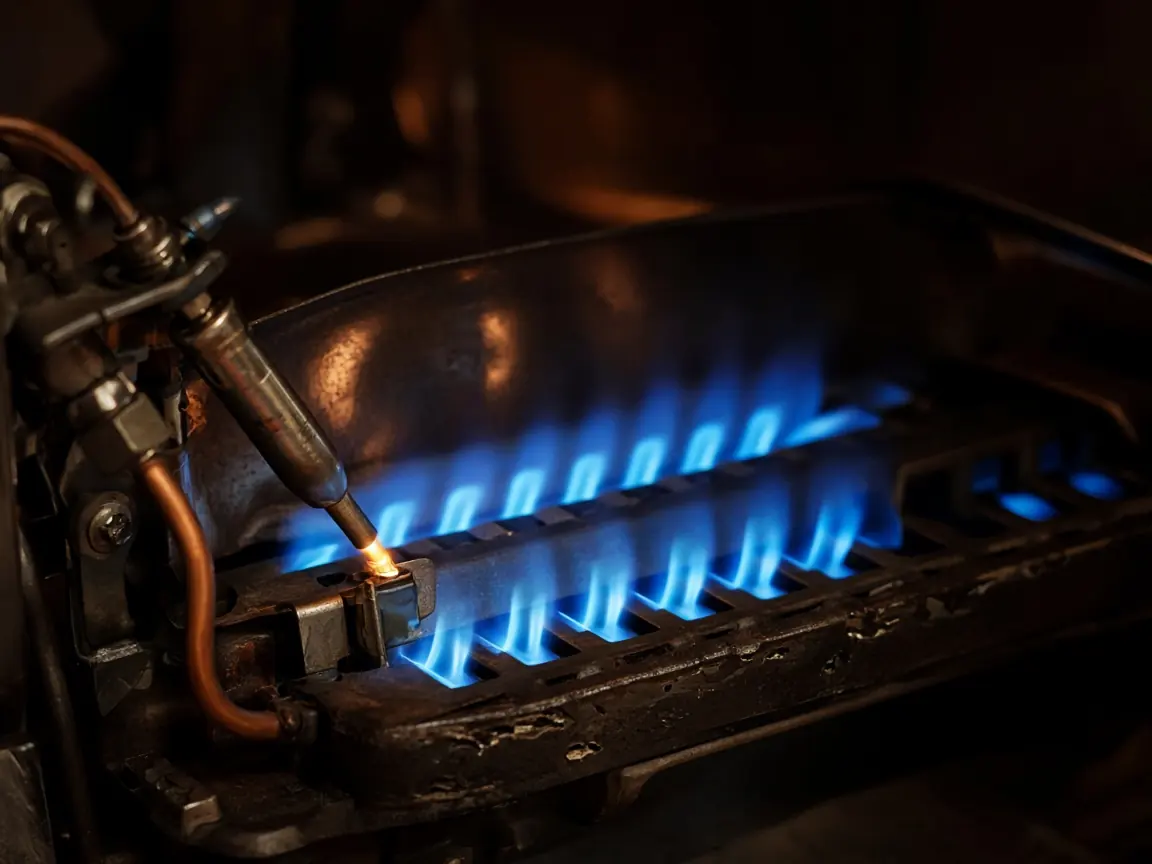
When a pilot lights but goes out as soon as you release the knob, the usual cause is a worn or dirty thermocouple or flame sensor. Other common causes on newer heaters are a clogged air intake screen, which is common in dusty garages, and a tripped flammable vapor sensor. If you smell gas at any point, stop. Leave the house and call SoCalGas or 911 from outside.
How the pilot system works
On many gas water heaters, a small pilot flame burns continuously. A thermocouple, a metal probe in the pilot flame, generates a small voltage when hot. That signal holds the gas valve open. If the flame goes out, the thermocouple cools and the valve shuts off the gas. Newer models may use a thermopile or electronic ignition with a flame sensor. Either way, the heater shuts down if it can't prove there's a flame.
Common causes
- Worn or dirty thermocouple. Over time, the tip corrodes or gets coated with soot, so it doesn't make enough voltage. It's a common, fairly inexpensive part.
- Thermocouple not in the flame. If it's bent away from the pilot, it won't heat properly.
- Dirty pilot orifice or tube. A weak, yellow or wavering pilot flame may not heat the thermocouple enough.
- Clogged air intake screen. Newer sealed-combustion heaters draw air through a screen near the bottom. Garage lint, dust and pet hair clog it, starving the flame. This is especially common in garages with laundry or workshops.
- Flammable vapor sensor tripped. Flammable-vapor-resistant heaters have a sensor that shuts the heater down if it detects vapors such as gasoline or solvents nearby. Some models need a reset or a new sensor after it trips.
- Drafts or venting problems. Strong drafts or poor venting can blow out the pilot or pull exhaust back into the combustion chamber.
- Gas supply problems. Low pressure or a partly closed valve can starve the pilot.
- Failing gas control valve. Less common, and more expensive to fix.
Not sure what your water heater needs? Talk it through by phone.
Call 000 000 0000Safe things you can check
- Make sure you don't smell gas. If you do, leave and call SoCalGas or 911 from outside.
- Check that the gas supply valve to the heater is fully open.
- Make sure other gas appliances work.
- Look at the area around the heater. Clear stored items, and remove any gasoline, paint or solvents.
- Gently vacuum dust and lint from around the air intake at the base, without opening sealed panels.
- Follow the lighting instructions on the label once or twice. Hold the pilot knob for the full time listed.
If it still won't stay lit, stop there. Repeated attempts won't fix a bad thermocouple and can cause other problems.
What a provider does
They'll check the pilot flame, test the thermocouple's output, clean or replace the pilot assembly, clean the air intake screen and flame arrestor, check gas pressure and venting, and confirm the gas valve works. On some heaters, a tripped vapor sensor or a sealed combustion chamber needs specific parts. See gas water heater repair.
When is it time to replace instead?
If the heater is past about ten years, has rust at the base, or needs a gas control valve, compare the repair price with a replacement. See water heater replacement.
When should you call about this?
Call when the problem keeps coming back, when there's water where it shouldn't be, when a fix means opening gas, venting or electrical parts, or when you're weighing repair against replacement. Describe what you've noticed, give the heater's fuel type, size and age, and share your Fullerton address or cross streets. You'll hear on the call whether your address is covered.
Sources
Checked on November 13, 2026. Rules and programs change, so confirm anything important with the agency.