
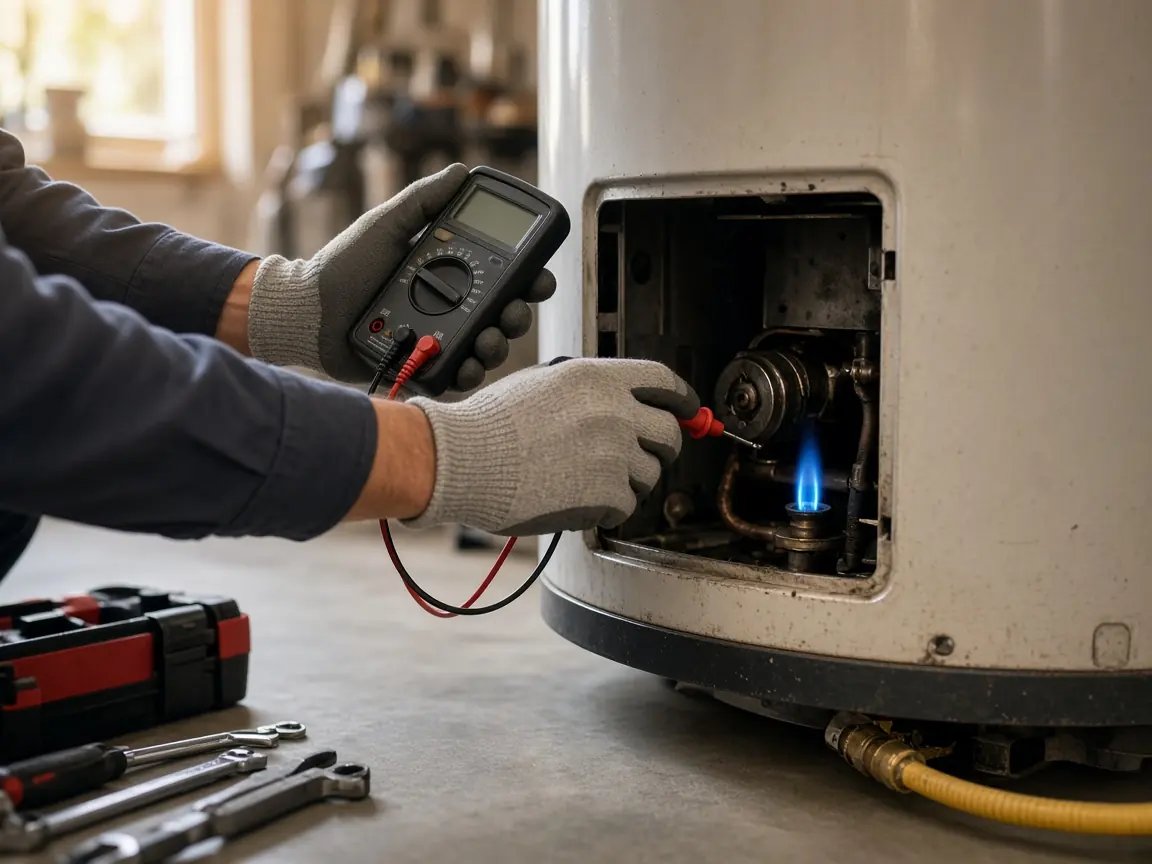
If only your hot water smells like rotten eggs, the cause is almost always inside the water heater: bacteria in the tank reacting with the anode rod to make hydrogen sulfide gas. It's unpleasant but usually fixable, often by changing the anode rod and disinfecting the tank. If the smell is in the air near the heater or appliances rather than in the water, treat it as a possible gas leak. Leave the house and call SoCalGas or 911 from outside.
Gas leak or smelly water?
Natural gas has an odorant added that smells like rotten eggs or sulfur. The difference is where you notice it: - In the air, near the water heater, stove, furnace or meter, even with no water running: possible gas leak. Leave and call from outside. - Only when hot water runs, and the cold water smells fine: almost always a water heater problem. - In both hot and cold water: the issue may be the water supply. Contact your water provider.
Why it happens
Most tank water heaters have a magnesium anode rod. It protects the steel tank by corroding in its place. Sulfate-reducing bacteria, which are harmless but smelly, can live in the warm, low-oxygen conditions of a tank. They react with the anode and sulfates in the water to produce hydrogen sulfide. It's more common when the heater sits unused for a while, when the thermostat is set low or in homes with water softeners.
Not sure what your water heater needs? Talk it through by phone.
Call 000 000 0000Fixes that usually work
- Replace the anode rod. Swapping a magnesium anode for an aluminum-zinc alloy anode often reduces or eliminates the smell. A powered anode, which uses a small electric current instead of a sacrificial metal, is another option. Removing the anode entirely stops the smell but voids most warranties and lets the tank rust quickly, so don't do that.
- Disinfect the tank. A provider can flush the tank and treat it with a disinfecting solution following the manufacturer's guidance. That kills the bacteria, though they can come back if the conditions remain.
- Raise the temperature briefly. Some manufacturers allow heating the tank above normal for a short period to kill bacteria. That creates a serious scald risk, so it should be done carefully and following the manual, with the temperature returned to normal afterward.
- Flush regularly. Less sediment means fewer places for bacteria to thrive. See how to flush a water heater.
Does it mean the water heater is failing?
Not by itself. A smell isn't a sign of a leak or failure. But checking the anode rod is a good idea anyway, because a heavily consumed anode means the tank is losing its protection. If the anode is gone and the tank is old, you may decide to replace the heater instead. See water heater repair.
Is the water safe?
Hydrogen sulfide at the levels typical in water heaters is mainly a nuisance, but if anyone in the household has health concerns, use cold water for drinking and cooking until it's fixed, and contact your water provider or a health professional with questions.
Tankless and heat pump units
Tankless heaters don't store water and rarely develop this problem. Heat pump water heaters have tanks and anodes, so the same causes and fixes apply.
What to tell the provider
Mention whether the smell is in hot water only, how long it's been happening, whether the house was vacant for a while, whether you have a softener and the heater's age and brand.
Talking it through by phone
If you'd rather have someone look at it, call the number on this page. Mention what you've already checked, the heater's type and age from the label and your address or nearest cross streets in Fullerton or a nearby city. Coverage, timing and pricing are confirmed on the call with the provider, not promised in advance by this site.
Sources
Checked on November 13, 2026. Rules and programs change, so confirm anything important with the agency.