
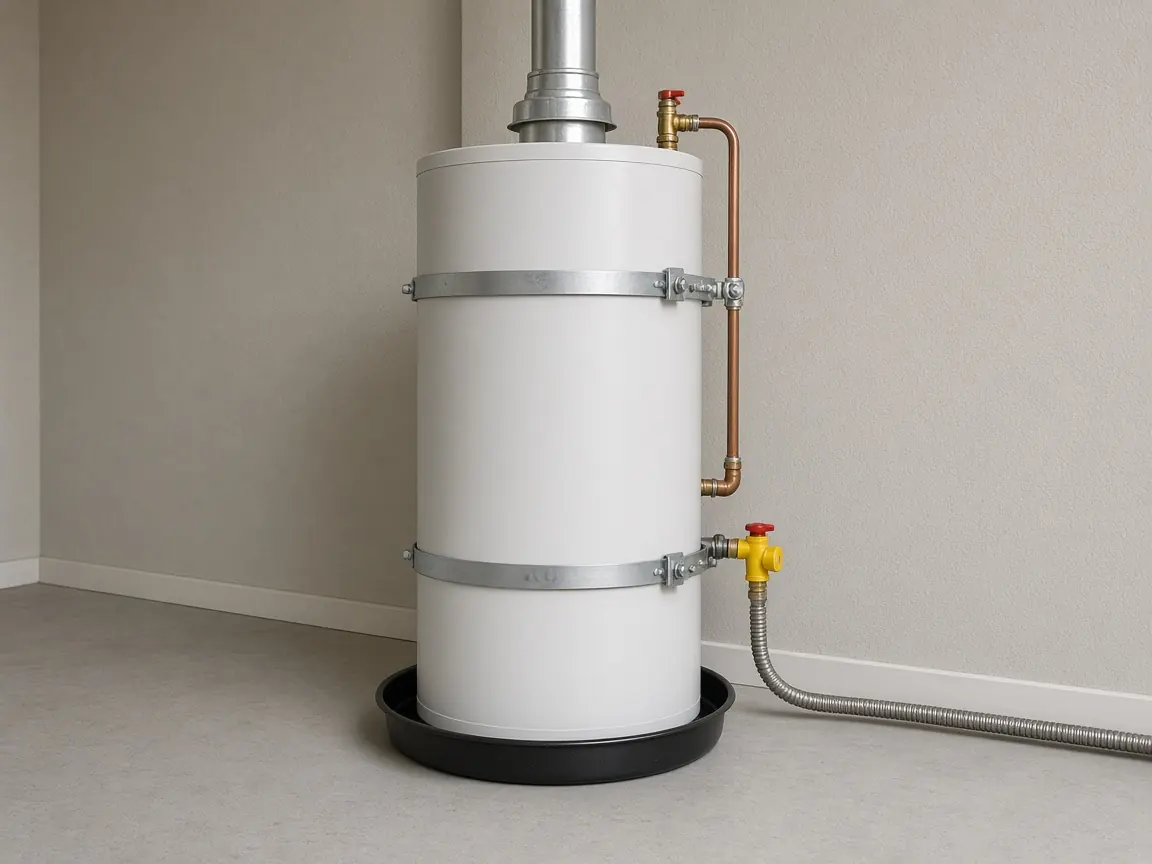
California requires water heaters to be braced, anchored or strapped so they won't fall or move in an earthquake. The rule is in California Health and Safety Code section 19211, and local building departments, including Fullerton Building and Safety, enforce it through plumbing permits and inspections. In an earthquake, an unstrapped tank can tip, break its gas line and water connections, and start a fire or flood.
What does the law say?
Section 19211 of the California Health and Safety Code requires all new and replacement water heaters, and existing residential water heaters, to be braced, anchored or strapped to resist falling or horizontal displacement from earthquake motion. It also requires sellers of homes to certify that the water heater meets this requirement. That's why strapping comes up during home sales in Fullerton.
Where do the straps go?
The California Plumbing Code generally calls for two straps, one in the upper third of the tank and one in the lower third, with the lower strap kept a few inches above the controls. Straps should wrap the tank and anchor securely into wall studs or masonry with appropriate fasteners, not just drywall. Larger tanks may need heavier straps. Many hardware stores sell strapping kits rated for specific tank sizes, but the anchors matter as much as the straps.
Not sure what your water heater needs? Talk it through by phone.
Call 000 000 0000Common problems with existing strapping
- Only one strap, or straps only around the top.
- Straps screwed into drywall or thin trim instead of studs.
- Gaps between the tank and the wall, so the tank can move before the straps catch it. Blocking or spacers fill that gap.
- Plumber's tape (thin perforated metal strap) used instead of a proper strap. Many inspectors don't accept it.
- Old straps left on a new tank of a different size.
Gas connections and flexibility
Strapping keeps the tank in place, but the gas and water connections should be flexible enough to handle a little movement without breaking. Approved flexible gas connectors and an accessible gas shutoff valve are part of a code-compliant installation. If you smell gas after an earthquake, leave and call SoCalGas or 911 from outside.
Garage, closet and outdoor installs
- Garages: gas heaters generally need the burner raised 18 inches off the floor unless the heater is listed as flammable-vapor resistant, plus protection from vehicle impact where a car could hit the tank. The platform itself must be solid.
- Closets and service porches: common in older Fullerton homes near downtown. Space is tight, so check that straps can anchor to studs and that combustion air and venting are adequate.
- Outdoor enclosures: need a solid base and strapping to the structure, plus weather protection.
How to check your own heater
Look for two straps at the right heights, anchored into studs. Push gently on the tank. It shouldn't rock or move. Check that the gas line has a flexible connector and that there's a shutoff valve nearby. If anything looks off, a provider can fix it in a short visit, or during a replacement. The new heater must be strapped as part of the permitted job; see Fullerton water heater permits.
Tankless and heat pump units
Wall-mounted tankless heaters are fastened to the wall by design. Heat pump water heaters are taller and heavier than many tanks, so strapping and floor support deserve attention. Follow the manufacturer's instructions and local code.
When should you call about this?
Call when the problem keeps coming back, when there's water where it shouldn't be, when a fix means opening gas, venting or electrical parts, or when you're weighing repair against replacement. Describe what you've noticed, give the heater's fuel type, size and age, and share your Fullerton address or cross streets. You'll hear on the call whether your address is covered.
Sources
Checked on November 13, 2026. Rules and programs change, so confirm anything important with the agency.