
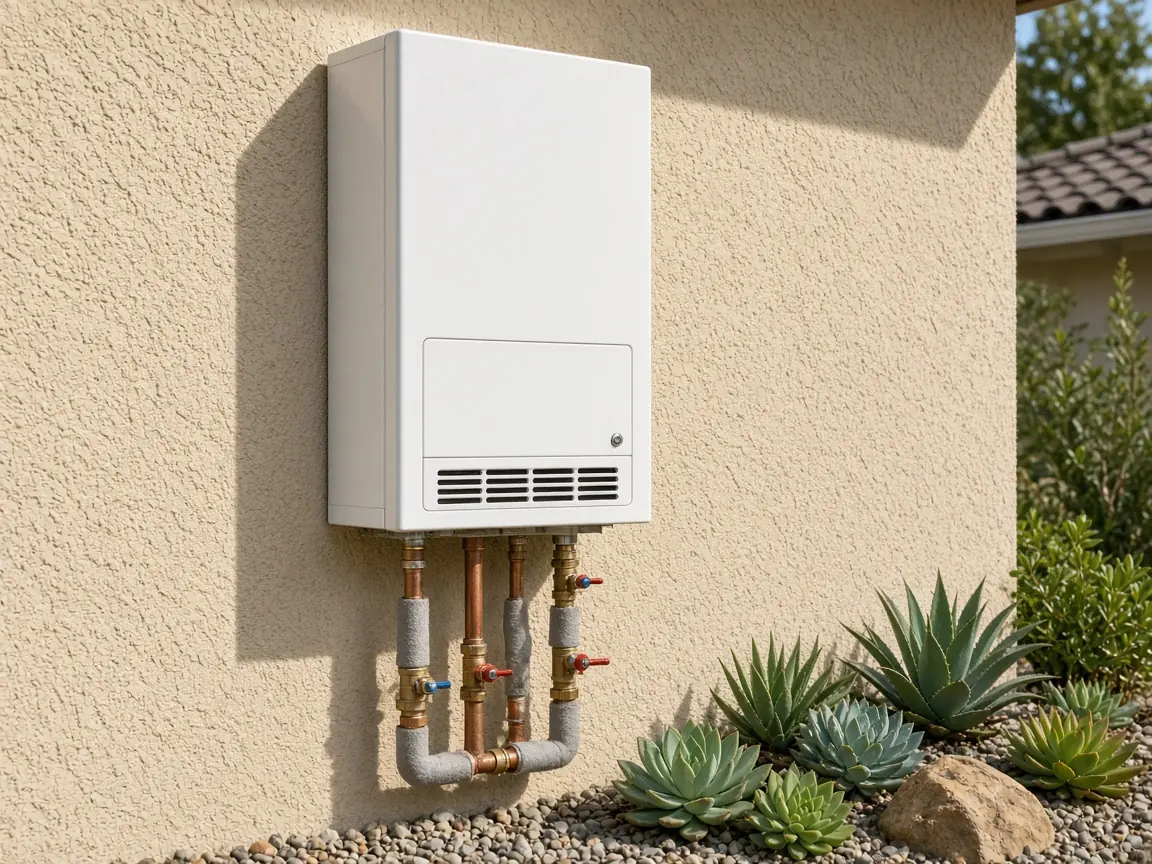
Water in Fullerton and much of North Orange County is generally considered hard, meaning it carries dissolved calcium and magnesium. That doesn't make it unsafe to drink, but those minerals come out of solution when water is heated. In a tank, they settle as sediment. In a tankless unit, they coat the heat exchanger as scale. Over years, that costs efficiency and shortens equipment life.
Where does Fullerton's water come from?
Fullerton's water is a blend of local groundwater pumped from the basin managed by the Orange County Water District and imported water delivered through the Metropolitan Water District of Southern California. The mix varies by season and supply conditions. The City of Fullerton publishes an annual water quality report that lists hardness and other measurements. The City of Fullerton website is the place to find the current report.
What hard water does to a tank heater
- Sediment layer. Minerals settle on the tank bottom. On gas heaters, that layer sits between the burner flame and the water, so heat transfers less efficiently and the tank bottom runs hotter.
- Noise. Water trapped under sediment boils in small bursts, causing popping and rumbling. See why a water heater makes noise.
- Element burnout. On electric tanks, sediment buries the lower element, which can overheat and fail.
- Lost capacity. Thick sediment takes up room that should hold hot water.
Not sure what your water heater needs? Talk it through by phone.
Call 000 000 0000What hard water does to a tankless heater
Tankless units heat water quickly through narrow passages. Scale narrows those passages, which leads to overheating, error codes and less hot water. That's why most manufacturers call for periodic descaling, often about once a year in hard water, and why installers add isolation valves for it. See tankless water heater repair.
And heat pump units?
Heat pump water heaters have tanks, so they collect sediment like standard tanks. Some also have heat exchangers that can be affected by scale. Follow the manufacturer's maintenance schedule.
Maintenance that helps
- Flush tank heaters about once a year. See how to flush a water heater.
- Descale tankless heaters on the manufacturer's schedule.
- Check the anode rod every few years. Hard water and sediment can speed up how fast it's consumed in some homes.
- Keep the temperature moderate. Higher temperatures make minerals precipitate faster. Many households use about 120°F.
Treatment options
- Water softeners exchange calcium and magnesium for sodium or potassium. They reduce scale throughout the house but need salt, regeneration water and a drain. Softened water can be harder on anode rods, so check them more often.
- Scale-reduction filters (often polyphosphate cartridges) installed ahead of a tankless unit reduce scale formation at that appliance. They're smaller and simpler but need cartridge changes.
- Salt-free conditioners use various methods to change how minerals behave. Results vary, so ask for independent test data before buying.
Some cities and sanitation agencies have rules about salt-based softener discharge. Check with your city or the sewer agency, such as OC San, before installing one.
Is hard water worth treating just for the water heater?
Often not by itself. Regular flushing or descaling handles most of the problem for much less money. Treatment makes more sense if you also want less spotting on fixtures and glassware, or if you have a tankless unit and want to stretch the time between descaling.
Talking it through by phone
If you'd rather have someone look at it, call the number on this page. Mention what you've already checked, the heater's type and age from the label and your address or nearest cross streets in Fullerton or a nearby city. Coverage, timing and pricing are confirmed on the call with the provider, not promised in advance by this site.
Sources
Checked on November 13, 2026. Rules and programs change, so confirm anything important with the agency.